July 13, 2025
is AI the future orf fashion or just a trend?
Is AI the Future of Fashion or Just a Fleeting Trend?
The fashion model has been a central figure in the evolution of the fashion industry, reflecting not only changes in style but also shifts in societal values. Over time, fashion models have transformed from mere muses of designers to influential icons who shape global beauty standards and cultural trends. But with the rise of artificial intelligence (AI), the concept of the fashion model is evolving once again. Is AI here to stay, or is it simply a passing trend in the ever-changing world of fashion?
The Early Days: Society Muses and the Birth of the Mannequin
The concept of the fashion model dates back to the mid-19th century. Charles Frederick Worth, often considered the father of haute couture, is credited with using live models to showcase his designs. Before Worth, fashion houses relied on mannequins—dolls dressed in miniature versions of their latest styles. Worth’s wife, Marie, was one of the earliest live models, presenting his work to clients in Paris. This practice paved the way for the professionalization of modeling as a craft.
In the early 20th century, fashion models were often society women or actresses who embodied the glamour and elegance designers wanted to convey. These muses brought a sense of aspiration, giving clients a real-life glimpse of how the garments could be worn. The first modeling agencies emerged during this time, signaling the beginning of a more formalized career path for models.
The Rise of the Supermodel: The 1950s to the 1990s
The post-war era brought with it a newfound fascination with glamour, and fashion models began to take on a more prominent role. In the 1950s, models like Dovima and Suzy Parker graced the pages of major fashion magazines, becoming household names. The profession continued to evolve through the 1960s, when Twiggy’s waif-like look defined the decade, symbolizing the youth-driven cultural revolution.
The 1980s and 1990s were the golden age of the supermodel. Figures like Naomi Campbell, Cindy Crawford, Linda Evangelista, and Claudia Schiffer transcended the world of fashion, becoming celebrities in their own right. These models were not only faces for designers but also personalities that commanded significant influence in popular culture. They brought a new level of glamour and visibility to the profession, appearing in music videos, television shows, and major advertising campaigns. Linda Evangelista famously said, "We don’t wake up for less than $10,000 a day," illustrating the power and prestige that came with being a supermodel during this era.
Diversity and Inclusion: The 2000s Onward
The turn of the 21st century saw a push for more diversity and inclusion within the modeling industry. As fashion became more global, there was a growing demand for models who represented different ethnicities, body types, and gender identities. The early 2000s began to see more diverse faces on the runway, with models like Alek Wek, Liya Kebede, and Gemma Ward challenging traditional beauty standards.
In recent years, the industry has made further strides toward inclusivity, driven by public demand for representation and a changing cultural landscape. Models like Ashley Graham, Adut Akech, and Hunter Schafer are redefining beauty norms, advocating for body positivity, racial diversity, and gender fluidity. This shift has been largely fueled by social media, which has given models a platform to speak directly to their audiences, bypassing the gatekeepers of traditional media.
The Digital Age: AI, Virtual Models, and the Future
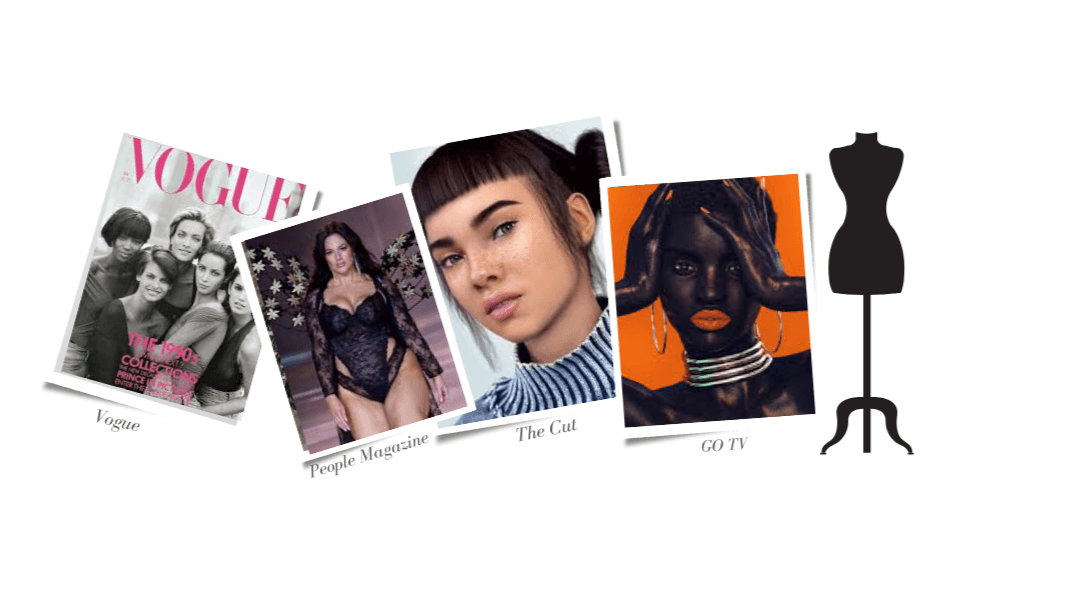
Today, the concept of the fashion model is evolving once again, thanks to advancements in technology. Virtual models like Lil Miquela and Shudu Gram have emerged, blurring the lines between reality and digital art. Created entirely by computer-generated imagery (CGI), these virtual influencers have amassed millions of followers and have worked with major fashion brands, symbolizing the intersection of technology and fashion.
Artificial intelligence is also reshaping the modeling industry. AI-generated imagery allows brands to create customized visuals without the need for traditional photoshoots, enabling more diverse representation without the logistical constraints of casting multiple models. While this offers opportunities for increased inclusivity, it also raises questions about authenticity and the role of human models in the future of fashion.
Is AI the Future of Fashion or Just a Fleeting Trend?
The rise of AI in fashion has sparked debate about whether this technology represents the future of the industry or is simply a passing trend. AI’s ability to create lifelike, diverse visuals on demand provides an opportunity for brands to redefine their approach to fashion imagery. AI-generated models offer a level of customization that traditional modeling simply cannot match, allowing brands to showcase their products on a wide variety of body types, skin tones, and identities without the limitations of physical photoshoots.
However, the use of AI-generated models also raises concerns about authenticity. Many consumers still value the human connection that comes with seeing real people in fashion campaigns—models who can share their stories, advocate for causes, and inspire audiences on a personal level. The rise of virtual models and AI-generated imagery may make fashion more efficient, but it risks losing the emotional depth and relatability that human models bring to the table.
For now, AI appears to be a powerful tool that complements traditional fashion modeling rather than replacing it. The technology allows brands to scale their efforts in creating inclusive and diverse imagery, making fashion more accessible to all. However, the future of fashion will likely depend on finding the right balance between embracing technological innovation and maintaining the authenticity that comes from human representation.
From Muses to Influencers: Are We Just Going Back to Mannequins with AI?
The history of the fashion model is a reflection of broader societal changes—shifts in beauty ideals, cultural values, and technological progress. But as we move further into an era of AI-generated imagery, are we simply returning to the concept of mannequins—now modernized with AI? If we are being responsible and transparent about when AI is used and when a body is artificially created, isn’t that just a digital version of a mannequin? The key may lie in how we acknowledge the use of AI and where these digital bodies come from, ultimately making AI a tool rather than a replacement for authentic representation. The fashion industry will continue to adapt, finding new ways to blend technology, creativity, and authenticity in the pursuit of beauty and representation.
About the authors
Lisa Marie Bagge Co- Founder of Fashionlab
Lisa, a business innovator focused on sustainable fashion solutions and an advocate for responsible AI and a circular economy, co-founded Fashionlab to reshape e-commerce imagery. She aims to lower carbon emissions by reducing return rates with AI-generated, on-brand visuals—offering a sustainable, cost-effective alternative to traditional photoshoots.
Camilla Westerlind Co- Founder of Fashionlab
With over 20 years of experience in global fashion retail and marketing, including senior roles at H&M Group, Camilla co-founded Fashionlab to bridge the “expectation gap” in online shopping. Drawing on her extensive industry network and expertise, she aims to reduce return rates by leveraging AI to create realistic, inclusive product images. Her mission is to help brands boost customer satisfaction and reduce returns, making online fashion more sustainable and efficient.